
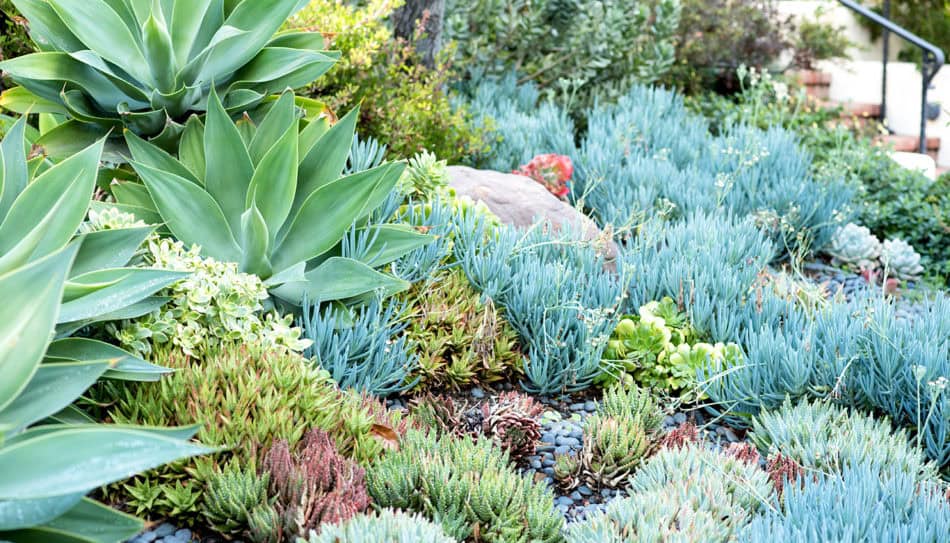
Los Angeles gardeners are increasingly talking about “going native” with their landscapes. Many people assume a native garden simply means a yard full of drought-tolerant plants (maybe some cacti and succulents) that hardly need water. In reality, “native” has a specific meaning: it refers to plants that are indigenous to our local Southern California ecosystems. A truly native garden is much more than just a low-water, spiky desert landscape. In this article, we’ll dispel common myths about native gardens in L.A. and explore why embracing authentic California natives is so important (and rewarding!).
Native vs. Drought-Tolerant: Not the Same Thing
It’s a common misconception that native is just another word for drought-tolerant. Carol Bornstein, a noted native plant expert, warns that it “does natives a disservice to lump them together as low-maintenance and drought-tolerant”. In other words, not all native plants are super low-water or zero-care, and not all drought-friendly plants are native to Los Angeles. For example, a saguaro cactus or South African jade plant might survive our dry climate with little water, but they aren’t from here – they don’t naturally grow in L.A. at all. In fact, many desert succulents people associate with California “aren’t native at all but hail from arid parts of Mexico, South Africa and Australia”. So, filling your yard with random cacti and succulents might create a desert-style look, but it’s not a Los Angeles native garden.
Furthermore, while California natives are often adapted to our long dry summers, they come from many different habitats. Some natives love moisture (think of streamside plants in our mountains), and others go semi-dormant in the hottest months. So you can’t assume a “native” garden will be a uniformly bone-dry, cactus-filled plot. Native plants also aren’t automatically no-maintenance; they need proper placement and some care to thrive (usually watering in their first year to get established). The key is that they are adapted to local conditions – once established, many natives won’t need much supplemental water at all, relying mostly on rainfall.
That hyper-local approach can make all the difference. One Los Angeles homeowner installed a native garden two years ago with David Newsom of Wildyards Project, and the experience reshaped their understanding of what “native” truly means. Instead of stopping at Southern California or even Los Angeles natives, the planning focused on what plants were indigenous to that exact neighborhood. The design even accounted for migratory bird patterns and how water naturally flowed through the yard before deciding what to plant and where. The result wasn’t just drought-tolerance — it was a landscape designed to function as a living ecosystem.
Say No to Succulents? Well, not all succulents – but do be cautious. Most of those stylish succulents at the nursery (and even many cacti) are non-native imports. They may be drought-tolerant exotics from climates similar to ours (Mediterranean or desert regions abroad), and they can certainly survive in L.A. gardens. However, they “attract insects and birds, although in much limited varieties and amounts” compared to natives. In contrast, plants that are truly native to California create a robust ecosystem in your yard – “fantastic for the ecosystem, meaning your garden will be full of birds and insects”. So if your goal is an ecologically rich, genuinely local garden, a jade plant or African aloes won’t contribute the way a California sagebrush or buckwheat will.
Don’t Replace Your Lawn with Plastic or Gravel
In drought-parched Los Angeles, many homeowners are tempted to rip out water-hungry lawns – which is understandable – and replace them with artificial turf or a gravel “zero-scaped” yard. It’s time for a reality check on these options. Artificial turf, in particular, is not the eco-friendly savior it might seem. It’s basically a plastic carpet, and one native plant nursery owner didn’t mince words about it: “It’s extremely toxic to the environment, it sheds microplastics nonstop and it’s a single-use plastic that usually ends up in a landfill… It breeds bacteria from animal waste, it’s as hot as concrete… and it destroys the soil underneath.” She went so far as to say “I would rather see people plant traditional water-guzzling turf rather than artificial turf.”. In other words, even a real grass lawn (which does use water) is preferable to fake grass when it comes to environmental health.
Artificial turf can feel like wrapping your yard in plastic. It may save water, but it creates a hot, lifeless space that offers none of the benefits of a living garden.
Why such strong words against fake grass? For starters, heat. Anyone who’s walked on artificial turf in summer knows it gets blisteringly hot. Studies back this up: on a mild 78°F day, artificial turf in the sun reached about 125°F, whereas real grass in the same conditions stayed much cooler (and interestingly, the taller the grass, the cooler it stayed – a lawn kept at 6 inches high was around 67°F, while closely mowed grass was 83°F). On truly hot days, it’s even worse: researchers measured synthetic turf in Palm Springs at over 165°F during a 113°F heat wave. That’s like turning your yard into a frying pan. It’s no surprise one Los Angeles couple who installed artificial turf found “you couldn’t walk on it in the summer – it was way too hot to go barefoot,” and even their dogs refused to walk or play on it. Imagine an entire block of plastic lawns radiating heat – as the L.A. Times quipped, it’d be like sitting next to a roaring fire during our blistering summers.
Heat isn’t the only issue. Fake turf doesn’t breathe or absorb water. When it rains, water sheets off into the street (carrying whatever dirt or pet waste is on it) instead of soaking into soil. It also “fails to replenish groundwater” and starves the soil beneath of the moisture and nutrients that living roots would provide. Under that plastic carpet, the ground literally dies – beneficial microbes, earthworms, and soil life can’t survive. Plus, any spills (like dog urine) just sit there; artificial lawns have to be hosed down to clean them, ironically wasting water and often leading to a gross odor on hot days. And when artificial turf wears out (typically in 5–10 years), you have to send that giant sheet of plastic to the landfill since it’s not easily recyclable.
What about gravel yards or replacing lawns with concrete pavers? Those come with their own problem: the heat island effect. Large areas of gravel, stone, or concrete absorb sunlight and re-radiate heat, raising local temperatures. They provide no shade or cooling. Walking past a rock-covered front yard on a hot L.A. evening can feel like “opening an oven door,” in sharp contrast to the cooler air around a planted, green yard. A water conservation official in Utah (a place with similar climate challenges) warns that some people overreact by ripping out lawns and putting in nothing but rock: “If we do that, you’ll start to see issues with the urban heat island effect, maybe even higher power bills, just because rock isn’t transpiring like lawn is.” In short, hardscape might save water, but it turns our neighborhoods hotter and more inhospitable. Los Angeles already struggles with hot summers; swapping all our greenery for gravel would just bake the city more.
Finally, consider the habitat loss. A plain gravel or fake turf yard might look tidy, but it’s dead space ecologically – an “ecological dead zone” as one writer put it. No flowers, no nectar, no seeds; therefore, no butterflies, no bees, no birds. Pollinators certainly won’t find anything to eat on synthetic grass or among stones. TreePeople, a local environmental group, reminds us that “butterflies, hummingbirds and our other pollinator friends need nectar from native plants. They’re not attracted to plastic grass”. With zero living vegetation, a yard like that is silent and lifeless – no birdsong, no rustling of leaves or wildflowers dancing in the breeze. For those of us who enjoy nature, that’s a real loss.
The Benefits of Keeping it Real (Yes, Even Lawns)
If you’re feeling a bit guilty about your traditional green lawn right now, take heart: a living lawn does have environmental benefits, especially compared to plastic or pavement. Plants clean and cool the air, something fake alternatives simply cannot do. Through photosynthesis, grass and other plants absorb carbon dioxide and pump out oxygen – literally producing fresh air for us. Leaves and grass blades also trap dust and particulate pollution, which then gets washed into the soil when it rains instead of floating in our lungs. A healthy expanse of grass acts as a natural air filter and air conditioner. According to Project EverGreen, an organization promoting urban green space, vegetation cools the environment through shade and transpiration (the release of water vapor). This cooling can significantly reduce surrounding air temperatures and even slow the formation of smog on hot days. In cities like L.A., every bit of cooling helps.
A real lawn, of course, requires watering – but with proper care (and perhaps a switch to climate-appropriate grasses), it doesn’t have to be a water hog or an ecological guilt trip. In fact, some experts point out that it’s often inefficient watering systems that waste water, not the lawn itself. Upgrading sprinklers or watering smartly can maintain a small lawn without massive waste. And here’s a surprising tip: let your grass grow a little longer. Besides saving you mowing work, slightly taller grass can keep soil shaded and cooler. In the study mentioned earlier, grass kept at 6 inches tall stayed dramatically cooler than closely cut grass. The taller grass also develops deeper roots, which can make it more drought-tolerant and better at sequestering carbon in the soil. So, contrary to the immaculate golf-green aesthetic, mowing less and tolerating a shaggier lawn can actually be healthier for your yard and the planet. Your lawn will still transpire moisture and clean the air, helping offset that urban heat effect – something a plastic lawn can never do.
In summary, if you’re deciding between plastic vs. plants, remember: living landscapes give back. They might drink some water, but they also cool your home’s surroundings, filter pollution, produce oxygen, and provide habitat. Dead landscapes (plastic, concrete, gravel) simply absorb heat and create runoff. Especially in Los Angeles – a city battling both heat and air quality issues – keeping real greenery is a net positive for the environment when done wisely. There’s also a noticeable shift in buyer perception. In Los Angeles especially, many homebuyers and tenants now actively avoid traditional lawns, understanding the difficulty and cost of maintaining them — particularly the high water usage. Native plantings, by contrast, are increasingly appreciated. They signal environmental awareness, lower long-term maintenance, and a design that makes sense for Southern California’s climate. As one horticulturist passionately put it, yards are meant to be dynamic, growing places, not static outdoor rugs. “Landscapes are not static things; they are supposed to grow,” she says, emphasizing that people often forget how important natural processes are to our well-being.
So, What Is a Native Garden, Then?
A native garden in L.A. means landscaping with the plants that belong here – the ones that evolved in our local climate, soil, and community of living things. Imagine the kind of vegetation you’d see on an untouched Los Angeles hillside or canyon: sages, buckwheats, manzanita, toyon, oaks, wildflowers, native grasses. Those are the building blocks of a native garden. It’s not a barren desert scene (in fact, L.A.’s native coastal sage scrub and chaparral habitats are quite lush and green for much of the year), and it’s not a tropical jungle either. It’s a landscape that reflects Southern California’s Mediterranean climate – summer-dry and winter-wet – with plants perfectly adapted to thrive in it.
In a true native garden, succulents and cactus are accents at most, not the main event. (Southern California does have a few native succulents – for example, Dudleya species and some yuccas – but our indigenous flora is dominated by shrubs, perennials, and grasses.) A common myth is that a “native garden” will look scraggly or colorless except in spring. In reality, if you choose a variety of native species, you can have something interesting in bloom or berry nearly year-round. There are California natives for every niche: dry sunny hillsides, shady woodland corners, even wet pond edges. Natives come in every form – “grasslike, vining, creeping, tree-sized, architectural or free-form – to fit any garden style”. Yes, you can even have a native lawn (more on that in a moment).
Crucially, a native garden is as much about ecology as aesthetics. When you plant natives, you are restoring a tiny patch of wild habitat. Local butterflies and moths will lay eggs on your native milkweeds and buckwheats (they generally can’t use exotic plants for food). Hummingbirds will flock to sage and penstemon blooms. Lizards will find shelter under the bush mallow. Birds will eat the toyon berries in winter. In other words, your yard becomes alive. And that transformation can be dramatic. After installing native plants, that same homeowner noticed more of everything — more birds, more butterflies, more bees. The increase in wildlife wasn’t subtle; it was immediate and ongoing, reinforcing how quickly native landscapes begin restoring ecological balance. Even a small native planting can become a “paradise for pollinators” and a refuge for birds, whereas a yard with no native plants is essentially devoid of wildlife. One native plant nursery owner notes that if you plant even a handful of native species, “bees and butterflies show up”, and if neighbors do the same, those pockets of habitat can connect into a wildlife corridor through the neighborhood. How cool is that? Instead of just one more fenced-off yard, you have part of a larger living network, a stepping stone for migratory birds or an oasis for urban pollinators. In our sprawling metropolis, these little backyard habitats are incredibly important for biodiversity.
There’s also a cultural and conservation aspect to going native. Los Angeles has lost so much of its original plant life to development – we don’t even fully know what we had, because so much has disappeared. By growing natives, home gardeners are helping preserve the genetic heritage of California flora. Some native plants that once covered hillsides exist now only in gardens or restoration sites. The California Native Plant Society notes that about one-third of our state’s native plant species are considered endangered or vulnerable due to habitat loss and invasive species. Planting natives in your yard can actually help prevent extinctions by providing sanctuary for these species (and the wildlife that depends on them). It also reconnects us to a sense of place. A garden of succulents from Madagascar or flowers from England might be pretty, but it doesn’t evoke Los Angeles. When you catch the fragrance of white sage on a warm afternoon, or see the brilliant orange of a California poppy, you know you’re home. As another native gardening advocate said, it’s about “regional identity, and the sense of loss you feel if you grew up in California and watched the wild land disappear” – planting natives is a way to bring back the smells and sights of the California landscape we love.
Native Plants That Thrive in L.A. (No Lawn, No Problem)
If you’re ready to give native gardening a try, a great first step is to get to know some of our local plants. For those starting out, one piece of advice stands out: work with someone knowledgeable to help you get the garden properly established. Native landscapes are incredibly low-maintenance once mature — but proper planning, placement, and early care are critical. With the right foundation, they eventually require very little intervention and largely sustain themselves. Here are a few truly native Los Angeles all-stars to consider (and notice how none of them involve plastic turf or faux cactus gardens!):
- California Poppy (Eschscholzia californica) – Our state flower, famous for painting whole hillsides orange in spring. These bright orange poppies are easy wildflowers for sunny spots. They reseed themselves each year and pop up after winter rains. Come spring, they’ll give your garden a burst of color and feed native bees.
- California Buckwheat (Eriogonum fasciculatum) – A champion of dry slopes, this small shrub has clusters of white to pinkish flowers that bloom for months and then turn rust-colored. California buckwheat is beloved by pollinators (butterflies, bees, and more) and produces seeds that birds enjoy. It’s extremely drought-tolerant – once established it needs almost no watering – and it’s native to the L.A. hills and coastal scrub. Bonus: those blooms smell like honey and make great tea!
- White Sage (Salvia apiana) – An iconic Southern California native and sacred plant, white sage has silvery-white leaves and tall flower spikes that attract bees, hummingbirds, and butterflies. It thrives in sun and heat, and yes, it’s very drought-tolerant (after the first year, it really doesn’t want summer water). White sage is evergreen (well, ever-silver) and brings that lovely aromatic sagebrush scent to your yard. Just give it room to breathe and well-draining soil.
- Toyon (Heteromeles arbutifolia) – Also called Christmas berry or California holly (Hollywood got its name from this plant!), toyon is a handsome evergreen shrub/toy-tree that can reach 8–15 feet. It has deep green leaves and in winter bursts with clusters of bright red berries – a vital food for birds like robins, cedar waxwings, and mockingbirds. Toyon is hardy, needs little water once established, and tolerates different soils. It’s great for a screen or backdrop and provides year-round greenery (one of those natives that “shine on with green leaves through the summer” when others go dormant).
- California Lilac (Ceanothus species) – These are show-stoppers of the native garden. Ceanothus (commonly called California lilac) are evergreen shrubs that in spring explode with profuse blue or purple flower clusters, literally covering the plant. Different species range from groundcover types to large shrubs. They thrive in sun and require almost no summer water (overwatering can actually kill them). Plant one and enjoy a wave of honey-scented blue blossoms each year – and lots of happy bees! Some popular local species are Ceanothus megacarpus (Bigpod Ceanothus) and Ceanothus arboreus (Island Ceanothus), among many cultivars.
- Southern Bush Monkeyflower (Diplacus aurantiacus, formerly Mimulus) – A compact shrub (~3–4 feet) with brilliant trumpet-shaped flowers in orange, yellow or red, which appear almost year-round in mild climates. These monkeyflowers are perfect for dry slopes or containers. Hummingbirds love the nectar. They do well with a bit of light shade inland, and need good drainage. A quintessential L.A. native flower for adding a pop of color.
- Lupines (Lupinus spp.) – Lupines are a group of native wildflowers that include annuals and perennials. The Arroyo lupine and Coastal bush lupine are great for gardens. They have spikes of purple, blue, or white pea-flowers that bloom in spring, and soft, green fan-shaped leaves. Lupines not only look beautiful, they enrich the soil by fixing nitrogen at their roots. They prefer sun and spring moisture, then dry summers (they go to seed by summertime).
- Yarrow (Achillea millefolium) – A versatile native perennial with flat-topped clusters of white (or pink) flowers and feathery leaves. Yarrow is tough: it can handle sun or part shade and very little water once established. It spreads to form a low mat and is often used as a lawn substitute or groundcover. Butterflies adore yarrow blooms. Native white yarrow looks elegant and understated, pairing well with other wildflowers.
- Native Grasses & Groundcovers – One exciting trend is replacing traditional lawns with native grass blends or groundcovers that stay green with less water. For instance, Purple Needlegrass (Stipa pulchra), California Fescue (Festuca californica and related fescues), and California Bent Grass (Agrostis pallens) are all native grasses that can be used to create a meadow-like lawn. In fact, horticulturists have developed “mow-free” sod mixes of native fescues that form a lush green carpet needing a fraction of the water of a classic turf. These native lawns only need mowing a few times a year (if at all) and use about 50–70% less water than Bermuda or fescue turf. Bent grass, in a public park setting, has thrived with mowing just 3-4 times a year and weekly summer watering – imagine not having to mow every weekend! Another alternative is Kurapia (Lippia) – a hybrid derived from a California native groundcover – which forms a dense green mat with tiny white flowers, needing little water or mowing (some locals have successfully replaced lawns with it to great effect). And if you like the look of ornamental grasses in a border, consider Deer Grass (Muhlenbergia rigens) – a graceful clumping native grass that looks like a fountain of fine textured blades, wonderful for dry gardens.
(Tip: The Theodore Payne Foundation and Tree of Life Nursery are excellent resources for finding California native plants and advice. They offer plant lists and workshops to help you choose natives that suit your specific site.)
As you plan, remember that a mix of species is key. By combining various native shrubs, perennials, annual wildflowers, and grasses, you ensure your garden has visual interest in every season and provides resources for wildlife year-round. For example, you might have spring-bloomers like poppies and ceanothus, summer-bloomers like buckwheats and sages, fall berry producers like toyon or coffeeberry, and winter-bloomers like manzanita or currants. This succession planting keeps your yard vibrant (dispelling the myth that native gardens look “dead” after spring) and continually supports birds and pollinators through the seasons.
And yes, you can still have a bit of lawn and be native-friendly. A small play area or lounging spot of native bent grass or buffalo grass, ringed by native plant beds, can give you the best of both worlds – a cooling green patch for your kids or pets, without the heavy water use of a conventional lawn. As John Greenlee (a pioneer in grass ecology) said, “the natural lawn revolution is here,” with creeping native grasses and sedges that need little water or fuss and can be walked on. So don’t feel you must eliminate grass entirely; just choose a better grass and shrink the lawn to only what you need.
Why Native Gardens Matter for Los Angeles
Choosing to plant a native garden is about working with nature rather than against it. In a time of climate change and ongoing drought, using plants adapted to our environment just makes sense – they can handle the heat and the dry spells far better than thirsty exotics. A native garden in L.A. will generally use far less water than a typical lawn-and-rosebush landscape, yet still remain lush and green in its own way. (Many natives survive on rainfall alone once established, only needing occasional irrigation during extreme heat waves.) It’s a win for water conservation.
But beyond water, think of the bigger environmental picture. As we discussed, natives support biodiversity. Your yard can become part of the solution to declining pollinators and habitat fragmentation in the city. If every neighborhood in Los Angeles had a few native gardens, we’d have a patchwork of mini-wildlife refuges that could significantly help birds, butterflies, and even endangered pollinators like the local Western monarch butterfly. You’re basically volunteering your little piece of land to give nature a home – and in return, you get the beauty and joy of nature at your doorstep. It’s hard to put a price on the delight of seeing monarch caterpillars munching on your milkweed, or finches picking seeds from your native sunflowers, or catching the perfume of Cleveland sage on a warm evening. These are experiences a plastic lawn will never provide.
There’s also the climate benefit: greener neighborhoods are cooler and healthier. By planting and maintaining living landscapes, we collectively combat the urban heat island effect. The EPA recommends more vegetation in cities specifically to counteract heat islands and improve air quality. Shaded, plant-filled yards can lower surrounding air temperatures by several degrees, reducing the need for energy-hungry air conditioning. Every tree or shrub you plant is like adding a tiny air conditioner and air purifier to the city. In a place like L.A. that battles smog and heat, that’s a very tangible benefit.
Finally, native gardening reconnects us to the land and history of Los Angeles. This region has a rich ecological heritage that many residents aren’t aware of – it’s not just palm trees and imported flowers. When you cultivate natives, you become curious about the local seasons (yes, we have seasons!), the local soils, and the wildlife. You might learn the names of birds that visit, or the indigenous uses of certain plants (did you know coastal sagebrush was nicknamed “cowboy cologne” or that toyon berries were used by Native Americans for food?). Your garden becomes a conversation piece and an educational tool, spreading awareness to friends and neighbors that our home has its own unique nature worth celebrating. There’s a special pride in saying, “These plants are Californian – they belong here.”
In summary, a “native garden” in Los Angeles means a garden that is of Los Angeles. It’s built from the palette of plants that Mother Nature herself used to paint our valleys and hills. Such a garden is water-conscious, yes, but also alive, cooling, and nourishing to the environment. It avoids the pitfalls of fads like artificial turf or all-gravel yards, which turn out to be hot, lifeless, and unsustainable. Instead, it embraces the wisdom of local ecology – resulting in a space that is beautiful, dynamic, and beneficial to both people and wildlife.
So the next time someone says they’re planning a “native garden” and you see them shopping for cacti or plastic turf, you might gently share with them what you’ve learned: native is not just a style, it’s a philosophy of gardening that prioritizes life, local character, and sustainability. By dispelling the myths and understanding what makes a garden truly native, we can all make choices that are kinder to our city and its natural heritage. Whether you swap out one thirsty hedge for a toyon, or transform your whole yard into a native plant oasis, you’ll be contributing to a cooler, greener, and more vibrant Los Angeles – one garden at a time. Happy native gardening! 🌱🌼