
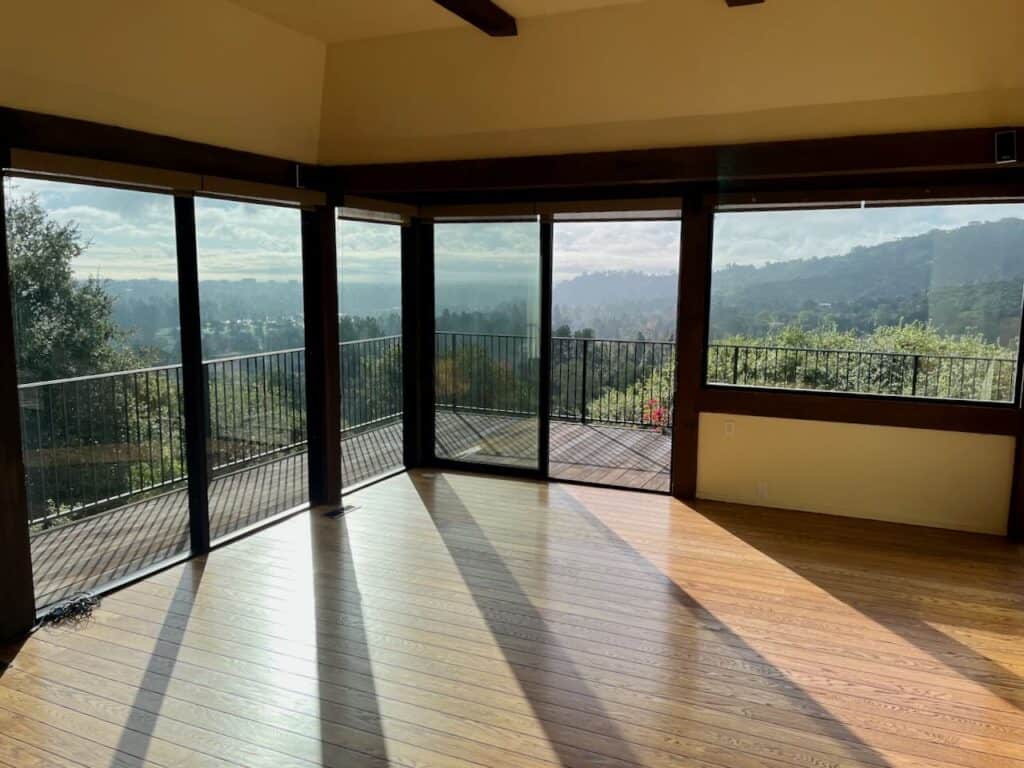
Most homebuyers begin their search the same way.
They open Zillow, Redfin, or Realtor.com, set a few filters, and start scrolling.
Within minutes, they have hundreds of homes at their fingertips, complete with professional photography, estimated values, school ratings, and neighborhood maps.
These tools have completely changed the way people buy homes, and largely for the better.
But they can also create a false sense of confidence.
A listing can tell you a home’s square footage, year built, lot size, and asking price.
It can’t tell you what it’s actually like to live there.
Some of the most important factors in a home purchase never appear online. In Los Angeles especially, where the experience of living somewhere can change dramatically from one block to the next, those missing details can matter just as much as bedrooms, bathrooms, and square footage.
At hearthLA, we’ve learned that the questions buyers don’t know to ask are often the ones that matter most.
Every Listing Is Designed to Show a Home at Its Best
Listing photos are marketing.
Good marketing.
Professional photographers carefully choose angles that make rooms appear larger. Twilight photography creates warmth and atmosphere. Wide-angle lenses can capture far more of a room than you might naturally perceive when standing inside it.
None of that means the listing is misleading. It’s simply presenting the property in the best possible light.
But we’ve walked into plenty of homes that looked significantly larger online than they felt in person. Photography angles can do an incredible job of creating a sense of space that simply isn’t there when you’re standing in the room.
And size isn’t the only thing a photograph can’t communicate.
Photos rarely show the busy street just outside the frame. They don’t reveal how much you can hear the neighboring property. You won’t experience the traffic that begins every weekday morning or discover that the seemingly private backyard is much more exposed than it appeared online.
Those aren’t necessarily reasons not to buy a house.
They are reasons to experience it before deciding what it’s worth to you.
The Street Can Matter More Than the House
One of the biggest surprises for buyers relocating to Los Angeles is how quickly the experience of a neighborhood can change.
Two homes may be only a few blocks apart while offering completely different living environments.
One street may feel quiet and secluded.
The next may function as a cut-through for commuters.
A property can be technically located in exactly the neighborhood you wanted and still provide a very different lifestyle from another property a few streets away.
One of the biggest things you simply can’t understand from a listing is how loud a property actually is.
Noise is particularly difficult to evaluate online.
A map can show you that a property is near a major road, but it can’t tell you exactly what you’ll hear from the bedroom. It can’t recreate the sound of airplanes overhead, neighborhood dogs, construction, nightlife, school traffic, or cars accelerating up a nearby street.
Even visiting once may not tell the whole story.
A peaceful street at 11 a.m. on a Tuesday may feel completely different during morning rush hour or on a Saturday night.
That’s why understanding a property means understanding its surroundings too.
You Can Miss Things Even When You’re Standing Inside the House
Seeing a property in person solves some of the problems of online home shopping.
It doesn’t solve all of them.
Buyers are understandably excited during showings, particularly when they walk into a house they already loved online. Add a busy open house, conversations happening in every room, other buyers walking around, and sometimes music playing in the background, and it’s surprisingly easy to miss what’s happening around you.
We’ve been at showings where a dog next door was barking and the buyers didn’t even notice.
They were focused on the house.
It sounds like a small detail, but imagine discovering after moving in that the sound you barely registered during a crowded twenty-minute showing is part of your everyday life.
That’s exactly the kind of thing we’re paying attention to during a showing.
Not because a barking dog automatically makes a home a bad purchase, but because buyers deserve the opportunity to decide whether something matters to them before they own the property.
The same principle applies to traffic noise, privacy, smells, neighboring properties, parking, sunlight, and dozens of other seemingly minor details.
Excitement naturally directs your attention toward everything you love about a house.
Someone still needs to be paying attention to everything else.
Your Future Lifestyle Matters More Than the Floor Plan
Most buyers naturally focus on bedrooms, bathrooms, and square footage.
Those numbers matter.
But they don’t necessarily predict whether you’ll enjoy living there.
Think about your daily routine.
How long will your commute actually take during rush hour?
Will you walk your dog every morning?
Do you enjoy entertaining friends?
Do you work from home and need quiet during the day?
Would you rather be able to walk to coffee shops and restaurants than have an extra guest bedroom?
Does the house have enough storage for the way you actually live?
These questions rarely appear on listing websites, yet they often determine whether a house truly feels like home.
We regularly remind clients that a home isn’t simply a financial investment. It’s also an investment in your quality of life.
There is real value in owning a home you genuinely love coming home to every day.
The Best Information Often Comes From the Neighbors
One piece of advice we give buyers regularly is simple:
Go meet the neighbors before you buy.
Neighbors can sometimes tell you more about living in a property than an inspection report ever could.
One of our clients took that advice to heart.
While their home inspection was taking place, they walked around the neighborhood carrying bouquets of flowers and introduced themselves to nearby homeowners.
Most of the conversations were exactly what you’d expect.
Then one neighbor casually mentioned something no online listing or inspection could have revealed: there was a prostitution ring that regularly congregated in the alley behind the house.
That certainly wasn’t in the listing photos.
It’s an extreme example, but it illustrates something important about due diligence.
Neighbors can tell you about recurring noise, parking frustrations, activity on the street, previous problems with the property, and other realities of living there that may be difficult to discover during a scheduled showing.
We encourage buyers not only to talk to neighbors, but also to walk around the neighborhood and, when practical, experience the area at different times, including at night.
You’re not looking for reasons to dislike the house.
You’re trying to understand what owning it will actually be like.
Due Diligence Isn’t About Finding a Perfect House
This distinction matters.
The purpose of uncovering things that Zillow can’t tell you isn’t to eliminate every property with an imperfection.
If that were the standard, very few people would ever buy a house.
Sometimes our clients discover something they don’t love and decide to purchase the home anyway.
That’s completely reasonable.
Maybe there’s more street noise than they expected, but they love the location.
Maybe storage isn’t ideal, but there’s room to improve it.
Maybe the neighboring property isn’t particularly attractive, but everything else about the house fits.
What’s important is understanding the full picture before making the decision.
Finding out about a compromise beforehand allows you to weigh it against everything you love about the property.
Finding out after closing can feel very different.
We’ve found that discovering something important afterward can leave buyers feeling powerless in what is already one of the biggest decisions of their lives.
The goal isn’t perfection.
It’s an informed decision.
A Beautiful Renovation Doesn’t Always Mean a Better Home
Los Angeles has seen thousands of beautifully renovated homes come onto the market over the past decade.
Some renovations are exceptional.
Others are designed primarily to photograph well.
A new kitchen can be wonderful. Fresh flooring is appealing. Modern fixtures attract buyers.
But cosmetic updates don’t necessarily tell you what happened behind the walls.
Experienced buyers ask different questions.
Was the electrical system updated?
How old is the plumbing?
Were permits pulled for major renovations?
Was the work completed thoughtfully?
How much of the renovation was cosmetic versus structural?
A beautifully renovated house can absolutely be a great purchase.
The important thing is understanding what you’re actually buying rather than assuming new finishes mean everything underneath them is new too.
The Photos Don’t Show Future Potential
One of the things we’re looking for during a showing isn’t simply what the home is today.
We’re thinking about what’s still possible and where the value-add opportunities may be.
That’s an important distinction.
Many buyers naturally gravitate toward what’s already finished. We may also be looking at an awkward room and realizing the floor plan could be dramatically improved. An underused portion of the property might have possibilities the listing barely acknowledges.
Sometimes a home that photographs poorly has tremendous potential.
Sometimes a beautifully finished home has very little left to improve.
Neither is inherently better.
It depends on the buyer, the price, the property, and what someone wants from the home.
Looking at what’s possible helps buyers evaluate more than the version of the property the seller has chosen to present.
You Can’t Feel a Home Through a Screen
This may be the biggest limitation of online home shopping.
You can’t experience how a home feels.
Natural light changes throughout the day.
Some homes feel remarkably peaceful the moment you walk inside.
Others feel cramped despite having plenty of square footage.
Airflow.
Privacy.
Noise.
Views.
The relationship between indoor and outdoor spaces.
Even the way rooms connect to one another can feel completely different from what a floor plan or photo gallery suggests.
These are things buyers discover by spending time in the property.
A good Los Angeles real estate agent should help you slow down enough to notice them.
Zillow Can’t Tell You Whether This House Is Worth It to You
Online estimates have become increasingly sophisticated.
They’re also attempting to answer a question with data that is deeply personal.
Two homes with similar square footage can have dramatically different values because of lot orientation, privacy, views, architectural character, street desirability, renovation quality, condition, and future resale potential.
But there’s another dimension of value that an algorithm can’t calculate:
What is the home worth to you?
We’ve advised clients to walk away from homes they genuinely loved because we believed they were paying too much for what they were getting.
At the same time, we don’t believe buyers should become so obsessed with optimizing a purchase financially that they lose sight of why they’re buying a home in the first place.
Sometimes paying more for the location, architecture, walkability, view, or lifestyle you genuinely want is worth it.
The important thing is knowing what you’re paying for and consciously deciding that it’s valuable to you.
The Right Questions Matter More Than the Right Filters
Online search tools are excellent at helping buyers narrow thousands of properties into a manageable list.
But filters can only take you so far.
Eventually, the questions become more human.
How does this home fit the way I actually live?
What would daily life feel like here?
What isn’t obvious from the listing?
What can I hear when I stop talking and actually listen?
What happens on this street at night?
What do the neighbors know that I don’t?
Why is this home priced where it is?
What could this property become five years from now?
Would I still love this house after the excitement wears off?
Our advice to buyers is simple: ask lots of questions and understand the full picture.
The objective isn’t to talk yourself into or out of a house.
It’s to know what you’re choosing.
Why Buyers Work With hearthLA
Technology has made searching for homes easier than ever.
It hasn’t replaced experience.
At hearthLA, we don’t see our role as competing with Zillow, Redfin, or any other home search platform. Those tools are incredibly useful.
Our job begins where the listing ends.
We help buyers understand the things that are difficult to put into a database: how a street feels, what you’re not noticing during a busy showing, whether a home’s compromises fit your lifestyle, where potential still exists, and what questions should be asked before you commit.
If you’re looking for a real estate agent in Los Angeles, those are the conversations worth having.
Because finding the right home isn’t about uncovering a property with absolutely no flaws.
It’s about seeing the full picture, understanding the tradeoffs, and making a decision you still feel good about after the keys are yours.